Cervical pain, commonly referred to as neck pain, is a widespread issue that affects people acros…
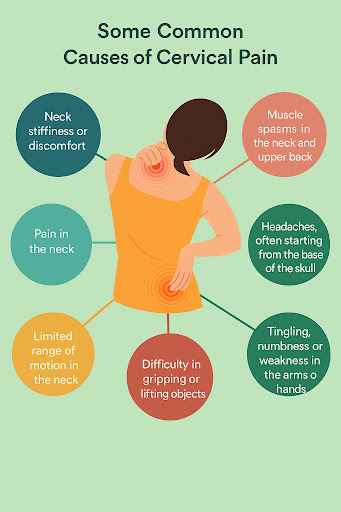
Cervical pain, commonly referred to as neck pain, is a widespread issue that affects people across all age groups. It originates from the cervical spine—the uppermost part of the backbone that supports the neck and head. The infographic outlines seven key symptoms associated with cervical pain, each pointing to underlying causes that may range from poor posture to nerve compression.
🌀 1. Neck stiffness or discomfort
This is often the first sign of cervical trouble. It may feel like your neck is “locked” or difficult to move. Causes include prolonged screen time, sleeping in awkward positions, or stress-induced muscle tension. In Indian households, using thick pillows or sitting hunched over while reading or working can contribute to this stiffness.
🔥 2. Pain in the neck
This pain can be sharp, dull, or throbbing, and may worsen with movement. It’s commonly caused by muscle strain, cervical spondylosis (age-related wear and tear), or even minor injuries. In Ayurveda, this is often linked to Vata imbalance, which governs movement and nerve impulses.
🔄 3. Limited range of motion in the neck
When turning your head becomes difficult or painful, it signals reduced flexibility in the cervical spine. This could be due to inflammation, disc degeneration, or tight muscles